
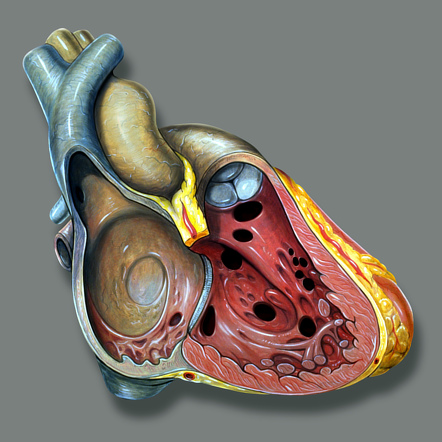
Congenital heart defects are structural abnormalities of the heart that are present at birth. These defects can involve the walls of the heart, the blood vessels, or the heart valves, and can affect the normal functioning of the heart.
Congenital heart defects can range from simple defects, such as a small hole in the heart, to more complex defects, such as transposition of the great arteries, in which the two main blood vessels leaving the heart are reversed.
The exact cause of congenital heart defects is not well understood, but it is believed to result from a combination of genetic and environmental factors. In some cases, congenital heart defects can be associated with genetic syndromes, such as Down syndrome.
Symptoms of congenital heart defects can vary depending on the type and severity of the defect, but may include shortness of breath, fatigue, rapid breathing, poor weight gain, and cyanosis (a blue or purple tint to the skin or nails due to low oxygen levels).
Diagnosis of congenital heart defects typically involves a combination of medical history, physical examination, imaging studies, and, in some cases, specialized testing, such as an echocardiogram or cardiac catheterization.
Treatment for congenital heart defects typically involves a combination of medical management and surgical intervention, depending on the type and severity of the defect. In some cases, ongoing monitoring and management may be necessary to ensure proper functioning of the heart.
In conclusion, congenital heart defects are structural abnormalities of the heart that are present at birth and can affect the normal functioning of the heart. The exact cause of these defects is not well understood, but is believed to result from a combination of genetic and environmental factors. Treatment for congenital heart defects typically involves a combination of medical management and surgical intervention, and ongoing monitoring may be necessary to ensure proper functioning of the heart.
Certainly, here is an example to illustrate congenital heart defects:
A 2-month-old male patient presents with symptoms of shortness of breath and poor weight gain. Further evaluation reveals that the patient has a history of cyanosis.
Based on the patient’s symptoms and medical history, the healthcare provider orders a series of imaging studies, including an echocardiogram. The results of these studies reveal the presence of a congenital heart defect, specifically a ventricular septal defect (VSD), which is a hole in the wall separating the two lower chambers of the heart.
The patient is referred to a pediatric cardiologist for further evaluation and treatment. Treatment for the patient’s VSD involves surgical intervention to close the hole in the heart wall. The patient undergoes the surgical procedure without complication and is monitored closely in the postoperative period.
At follow-up appointments, the patient’s weight gain and overall health improve, and the cyanosis resolves. The patient continues to be monitored regularly to ensure proper functioning of the heart and to detect any potential complications or changes in the patient’s condition.
In this example, the diagnosis and treatment of a 2-month-old patient with a congenital heart defect highlights the importance of prompt evaluation and treatment for this condition. The use of imaging studies and specialized testing, as well as surgical intervention, can lead to successful outcomes for patients with congenital heart defects.